
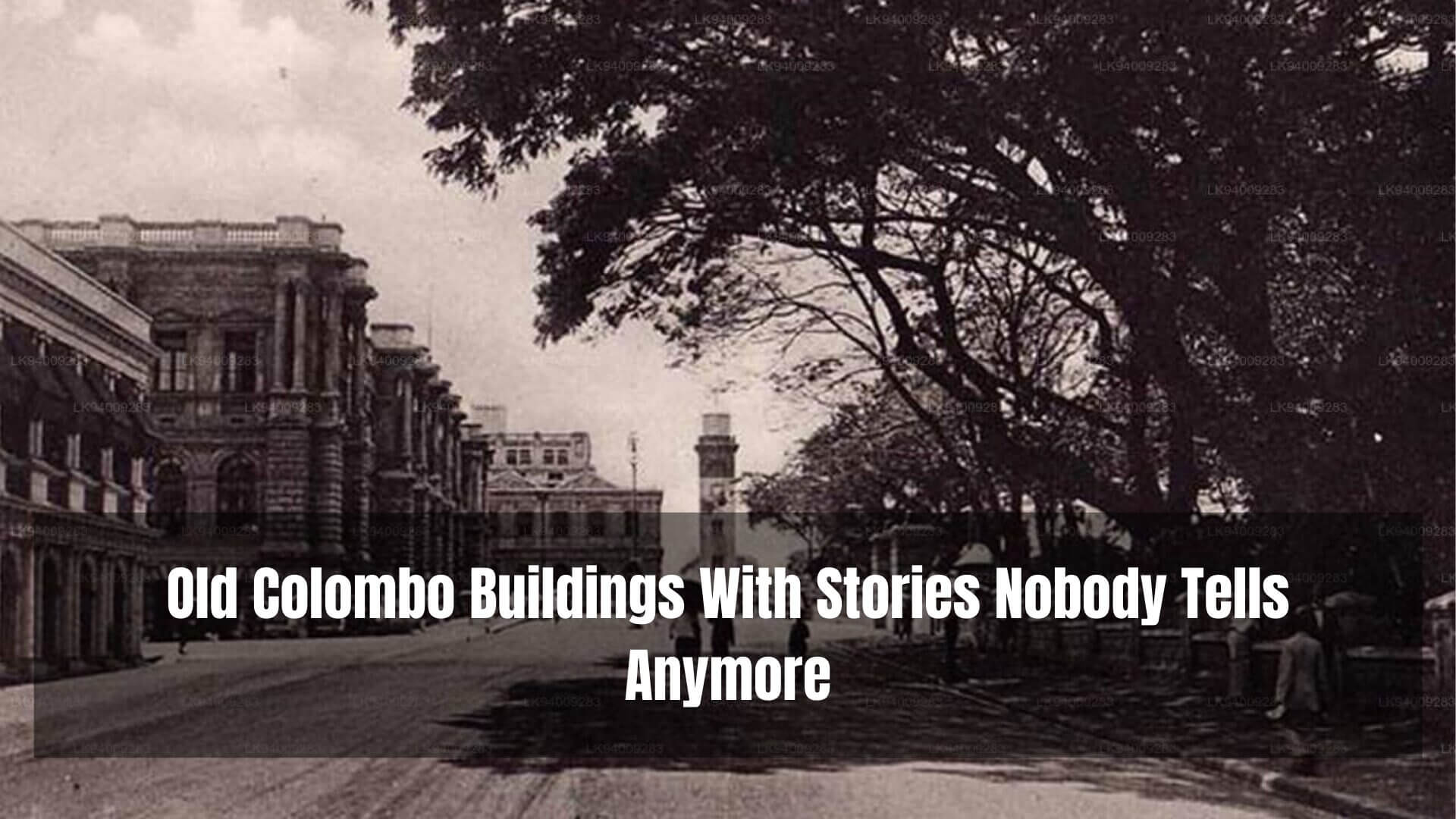
Old Colombo Buildings With Stories Nobody Tells Anymore

Old Colombo buildings still stand quietly across the city, holding stories of power, love, ambition, and loss that are rarely told anymore.
Walk through Colombo slowly enough and the city starts whispering.
Not the loud Colombo of traffic, glass towers, and coffee shops — but the older one. The Colombo that lingers in peeling paint, creaking staircases, and shuttered windows that have seen more history than most textbooks ever will.
These buildings don’t announce themselves. They don’t come with plaques or guided tours. Yet each carries stories of ambition, fear, power, love, and quiet resistance — stories that are slowly being buried beneath renovations and forgetfulness.
This is a walk through a few of those forgotten witnesses.
Many old Colombo buildings were witnesses to moments that shaped the city’s identity.
The colonial facades that watched power shift
In areas like Fort and Pettah, many colonial-era buildings still stand, though most people pass them without a second glance. These structures once housed trading companies, administrative offices, and private clubs where decisions about the island were made over papers and whiskey.
What’s rarely mentioned is how these buildings also watched power change hands. They saw the slow unraveling of colonial control, the anxiety of administrators who sensed the end approaching, and the quiet confidence of locals who knew history was turning.
In Colombo, independence didn’t arrive overnight — it echoed through corridors long before flags were raised.
The old General Post Office: more than letters
The old General Post Office building wasn’t just a place to send letters. It was a nerve centre of communication in a time when information moved slowly but deliberately.
During political unrest and global wars, letters were monitored, delayed, and sometimes never delivered. Love letters disappeared. Political messages were intercepted. Families waited weeks for news that shaped their lives.
Walls that once echoed with footsteps and stamped envelopes quietly absorbed fear, hope, and secrecy — none of which are mentioned when the building is referenced today.
Abandoned mansions that once defined social status
Scattered across older neighbourhoods are mansions with cracked verandas and overgrown gardens. These were once homes of merchants, professionals, and families who defined Colombo’s social elite.
Inside, there were grand dinners, arranged marriages, business negotiations, and generational expectations passed down over meals.
What’s often forgotten is how quickly fortunes changed. Some families migrated. Others lost wealth. Some homes were abandoned mid-story, leaving furniture behind like paused lives.
These houses aren’t just “old.” They’re interrupted narratives.
Walking past old Colombo buildings, it’s easy to forget how much history they contain.
Railway buildings that carried more than passengers
Colombo’s early railway structures were symbols of progress, but they also carried complex stories.
Trains transported workers, soldiers, and goods — but they also separated families, enforced labour movement, and reshaped livelihoods. Platforms saw tearful goodbyes, hopeful departures, and returns that never felt the same.
These stations remember emotions far more vividly than schedules.
Cinemas that once shaped dreams
Before streaming and smartphones, cinemas were portals.
Old Colombo theatres weren’t just entertainment venues — they were places where people learned how to dream differently. They introduced fashion trends, romantic ideals, and new ways of imagining life beyond the island.
Some of these cinemas now stand abandoned or repurposed. But once, entire generations sat in the dark, believing in stories larger than themselves.
These old Colombo buildings carry stories that never made it into textbooks.
Hotels that held quiet histories
Some heritage hotels and guesthouses in Colombo once hosted diplomats, traders, artists, and exiles. Deals were made in hallways. Confessions were shared in rooms. Lives changed overnight.
Not all history happens in public spaces. Some of it unfolds behind closed doors, leaving only silence behind.
Why these stories are disappearing
Modern Colombo moves fast. Development prioritises efficiency, not memory. Buildings are renovated, repainted, or demolished with little documentation of what they once meant.
When stories aren’t told, places lose depth. They become backdrops instead of witnesses.
Cities don’t just grow upward — they grow thinner when memory is erased.
Preserving old Colombo buildings means preserving Colombo’s memory.
Why Old Colombo Buildings Still Matter Today
Old buildings anchor us. They remind us that Colombo wasn’t always glass and steel — it was human, fragile, and constantly becoming.
Preserving these stories doesn’t mean freezing the city in time. It means letting progress coexist with remembrance.
Because once a building is gone, its stories don’t relocate. They vanish.
And Colombo becomes a little quieter.
References & Further Reading
You can include these at the end of the blog:
- Department of National Archives Sri Lanka
https://www.archives.gov.lk - Sri Lanka Department of Archaeology – Colonial & Urban Heritage
https://www.archaeology.gov.lk - Daily FT – Heritage, Urban Development & Conservation Articles
https://www.ft.lk - The Sunday Observer – Colombo History & Architecture
https://www.sundayobserver.lk - British Council Sri Lanka – Colonial History & Cultural Legacy
https://www.britishcouncil.lk - https://wathupiti.lk/sri-lankan-road-trip-starter-pack/


