
The Ancient Engineering Sri Lanka Quietly Mastered Before Europe Did
Ancient Sri Lankan engineering is one of the most overlooked technological achievements in world history. Long before Europe mastered large-scale irrigation, urban sanitation, and climate-resilient infrastructure, Sri Lanka had already engineered systems that worked with nature rather than against it.
History books love loud empires. Rome gets aqueducts. Egypt gets pyramids. Europe gets the Renaissance glow-up.
Sri Lanka? Sri Lanka perfected systems so advanced, so ecological, and so quietly genius that even modern engineers pause, squint, and go, wait… they did this when?
Long before Europe was seriously managing large-scale water, urban sanitation, and climate-resilient infrastructure, ancient Sri Lanka had already solved problems that today’s cities are still arguing about in conferences with bad coffee.
This isn’t a story of one clever invention. It’s the story of an entire civilisation thinking in systems—interconnected, sustainable, and deeply aware of nature’s rhythms.
Let’s wander back in time.
Ancient Sri Lankan Engineering and the Art of Water Management
At the heart of ancient Sri Lankan engineering was water. Not just storing it, but guiding it, slowing it, cleaning it, sharing it, and returning it to the land without exhausting it.
From around the 3rd century BCE, kingdoms centered around Anuradhapura developed one of the world’s most complex irrigation networks. These weren’t random tanks dug where water happened to pool. They were mathematically planned, geographically sensitive systems spread across entire dry zones.
The crown jewel of this mastery was the cascade tank system—a concept Europe wouldn’t approach until well into the modern era.
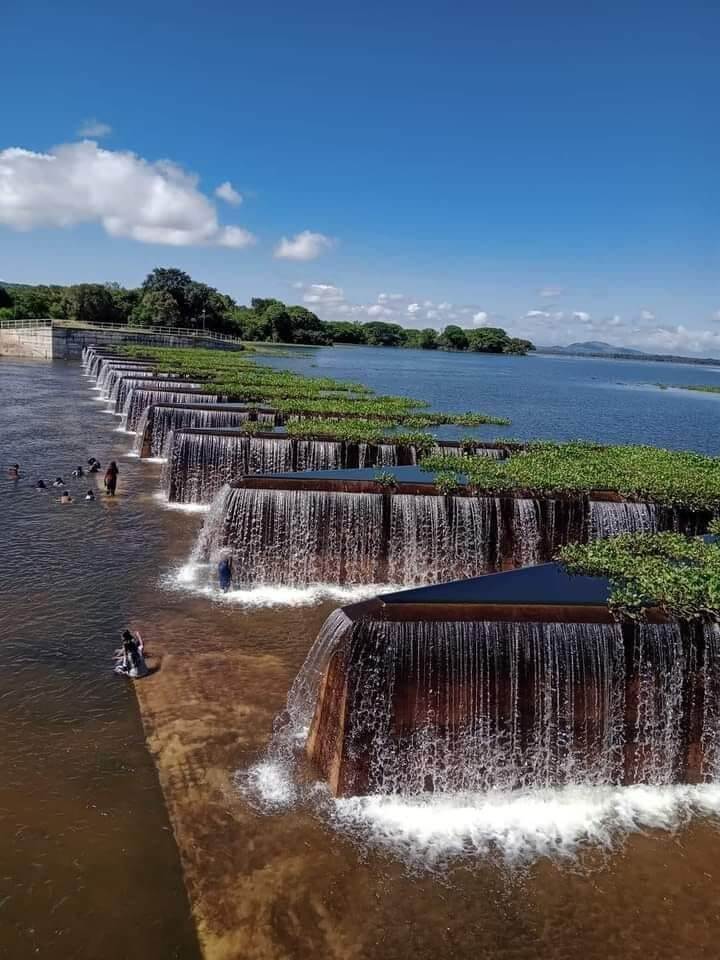
Instead of one massive reservoir doing all the work, Sri Lanka built chains of tanks, each feeding the next. Overflow from the upper tank gently flowed into the lower one, slowing erosion, filtering sediment, and preventing floods. By the time water reached rice fields, it was clean, controlled, and life-giving.
No pumps. No electricity. No concrete megastructures.
Just gravity, geometry, and an intimate understanding of the land.

The Science Europe Took Centuries to Learn
What makes this even wilder is that these systems weren’t just functional—they were ecologically intelligent.
Ancient engineers understood something modern urban planning often forgets: water systems must work with ecosystems, not dominate them.
Each tank wasn’t just a storage pit. It included:
- Perahana (filter zones using grass and gravel)
- Iswetiya (spillways that reduced pressure)
- Kattakaduwa (forest buffer zones that filtered salts and protected soil)
This meant tanks didn’t salinise farmland, didn’t destroy biodiversity, and didn’t collapse under pressure. Many of them are still functional over 1,500 years later.
Meanwhile, medieval Europe was still struggling with open sewage systems and waterborne disease.
That contrast isn’t shade. It’s just history being honest.

Sigiriya: A Fortress That Could Breathe
When people visit Sigiriya, they look up. At the lion paws. The frescoes. The drama.
What they often miss is what’s happening under their feet.
Sigiriya’s water gardens—built in the 5th century CE—operate on hydraulic pressure, underground conduits, and gravity-fed fountains that still function during the rainy season today.
Let that sink in.
These fountains turn on without pumps. No manual intervention. Just physics, elevation, and precision carving.
Europe wouldn’t fully understand or replicate comparable pressure-based garden hydraulics until many centuries later, during and after the Renaissance.
This wasn’t decorative water play. It was a live demonstration of engineering mastery embedded inside aesthetics. Beauty and function were not separate departments.

Urban Planning Without the Chaos
Ancient Sri Lankan cities weren’t accidental. Streets, monasteries, hospitals, drainage systems, and reservoirs were positioned deliberately.
Hospitals discovered at Mihintale and Anuradhapura included:
- Separate wards
- Advanced drainage
- Medicinal water supply
- Sanitation systems isolated from drinking water
In Europe, purpose-built hospitals with sanitation infrastructure would only become common much later, often after devastating plagues forced innovation.
Sri Lanka didn’t wait for disaster. It engineered prevention.
How Ancient Sri Lankan Engineering Solved Climate Challenges Early
Here’s the part that feels uncomfortably modern.
Sri Lanka’s irrigation systems were designed for unpredictable rainfall, long droughts, and intense monsoons. Ancient engineers assumed climate variability as a baseline, not an exception.
By distributing water across networks instead of centralising it, they created fail-safe systems. If one tank failed, others compensated. If rainfall shifted, water could be rerouted.
Today, climate scientists promote decentralised, nature-based solutions as the future of sustainable infrastructure.
Ancient Sri Lanka was already there.
Why This Knowledge Almost Disappeared
Colonial disruption played a big role. When European powers arrived, they often misunderstood or dismissed indigenous engineering, labelling tanks as primitive or inefficient.
Some reservoirs were abandoned. Others were repurposed poorly. The system logic—the why behind the design—was ignored.
Ironically, modern Sri Lanka later had to relearn its own ancient engineering through archaeology and hydrological studies, just as global researchers began recognising its brilliance.
History has a strange sense of humour.
This Wasn’t Luck. It Was Philosophy.
What sets ancient Sri Lankan engineering apart isn’t just technical skill. It’s mindset.
These systems were built with:
- Long-term thinking (generations, not election cycles)
- Respect for natural limits
- Community-scale benefit
- Maintenance baked into design
Engineering wasn’t about domination. It was about balance.
Europe eventually reached similar conclusions—through industrial failures, environmental collapse, and trial-by-error. Sri Lanka arrived there through observation and restraint.
The Quiet Genius We’re Still Catching Up To
Ancient Sri Lanka didn’t leave behind towering monuments everywhere. It left behind systems that worked.
Some still do.
In an era obsessed with shiny innovation, this history whispers something uncomfortable but powerful:
progress isn’t always about inventing new things. Sometimes it’s about remembering what already worked.
This tradition of long-term thinking can also be seen in Sri Lanka’s urban evolution, explored in our article on Old Colombo buildings with forgotten histories.
And Sri Lanka figured out a lot—long before Europe caught on.
Reference Links
- Journal of South Asian Studies – Traditional Water Management
https://www.tandfonline.com/toc/csas20/current


